
Driver of Science and Production: Seifullin University Agrotechnopark Sets the Vector for Agrosector Transformation


Kazakhstan's agro-industrial complex is a life-sustaining foundation and the strategic pillar of the national economy. Here, issues of food security, economic stability, and the country's global competitiveness intersect, rooted in historical traditions and unique natural potential. Today, the industry is entering a phase of profound transformation – from an extensive model to a technological one. Under these conditions, the key factor is no longer simply the presence of agrarian science, but its practical return – the ability to rapidly reach the field, the farm, and processing facilities.
The gap between science and production has long hindered the industry's development. The launch of the Seifullin University Agrotechnopark is a step toward overcoming this and an element of the systemic transition to applied, digital science integrated into the real sector. This step aligns with the task outlined in the Addresses of the Head of State – building an effective "education – science – production" chain. In this logic, the Agrotechnopark becomes a new growth point ensuring the continuous reproduction and implementation of agrarian innovations.
Agrotechnopark as the Applied Core of the Agro-Hub
According to the Concept for the Development of the Agro-Industrial Complex of the Republic of Kazakhstan for 2021–2030, developed by the Ministry of Agriculture of the Republic of Kazakhstan, the creation of the Seifullin University Agrotechnopark becomes a key element in transforming the National Agrarian Science and Educational Center into a vertically integrated Agro-Hub – a unified system uniting science, education, and production. At its core is the "quadruple helix" model, where the interaction of the state, science, and business is reinforced by developed innovative technopark infrastructure.
The Agrotechnopark forms the applied core of the system, ensuring the integration of technologies into the real production processes of the agro-industrial complex.
It is precisely within this model that its key function is realized – the translation of knowledge into applied solutions: from know-how to show-how. Through piloting and project support from the R&D stage to industrial implementation and scaling, a new model of technological development for the agro-industrial complex is formed, oriented toward innovative products, market value, and efficiency.
Full-Cycle Infrastructure: From Engineering to Analytics
The Agrotechnopark is a multifunctional innovative platform combining scientific-technological and production-technological contours, which ensures a seamless link between the development, approbation, and implementation of agrarian solutions.
The scientific-technological block is represented by a complex of unique full-cycle research laboratories – from sample preparation to high-precision analytics. Its structure includes accredited international and industry centers: the Kazakhstan-Australian Innovation Center for Molecular-Genetic Research, the Engineering Center for Organic Agrotechnologies, the Agro-Ecological Testing Center, the Center for Agrotechnology Digitalization, the Kazakhstan-Czech Aquaculture Center, the Kazakhstan-Chinese Biosafety Laboratory, as well as laboratories for physicochemical and analytical testing. This complex forms the scientific and technological foundation for ensuring food security, focusing on the quality, safety, and competitiveness of agricultural products.
Included in the structure of this block is a metalworking shop, where the integration of 3D modeling and prototyping with metalworking forms a complete production process – from a digital model to a finished product.

The ecosystem of the Agrotechnopark includes the following key elements: a Business Incubator – supporting startups, providing mentorship and access to financing; a Commercialization Office – transforming developments into market products through patenting, licensing, and finding business partners; an Extension Center – ensuring technology transfer through training and farmer consultations; a Situation Center – providing analytical support for the agrosector, generating forecasts, and supporting managerial decision-making – both at the level of individual agricultural enterprises and state bodies responsible for forming agrarian policy.
The production and technological contour of the Seifullin University Agrotechnopark is represented by real platforms in the organic sector – an area where Kazakhstan possesses significant growth and export potential. The creation of the Agrotechnopark has become the applied result of implementing the mega-project by the Ministry of Science and Higher Education of the Republic of Kazakhstan, "Development of New Organic Production Technologies and Agricultural Product Processing." The Agrotechnopark's infrastructure is built on a full-cycle principle: from research and the development of organic production technologies to their practical testing, scaling, and bringing finished products to domestic and foreign markets.
Pilot production lines have already been launched at the Agrotechnopark, testing the applied nature of the developments:
– a modular workshop for the production of organic whole-grain porridges and breakfast cereals; – a workshop for the production of organic sausage products.
The organic products manufactured at these facilities have passed European certification, confirming compliance with international standards and high readiness for export markets.
The Agrotechnopark aims to translate scientific developments into real economic value.
Commercialization is structured as a systematic process: through the development of a startup and spin-off ecosystem, the expansion of the patent portfolio, the implementation of projects, and the execution of applied R&D commissioned by agribusiness.
The obtained patents and protective documents are integrated into economic turnover through licensing and the transfer of rights, ensuring effective technology transfer into the real sector. These achievements demonstrate a qualitative shift: agrarian science is ceasing to be a cost and is transforming into a source of sustainable economic return.

Groundbreaking Research and Digital Architecture
A powerful scientific base has been established at Seifullin University, with funding amounting to 42% of the university's budget – a level comparable to leading global research universities. This base forms the foundation of the Agrotechnopark's technological developments, covering key areas of agrarian science and practice: biotechnology and genetics in crop production, veterinary medicine and biosafety in livestock breeding, organic production and agro-ecology, as well as digital solutions – from precision farming to artificial intelligence systems. Close integration with the IT infrastructure, which includes centers for Big Data, artificial intelligence, robotics, 3D modeling, agricultural machinery digitalization, and geoinformation technologies, creates a unified technological and digital contour for "smart" agriculture.
Dual Training: Workforce for the Real Sector
The Seifullin University Agrotechnopark is a key platform for training a new generation of specialists with practical competencies and work experience in real projects. The university creates a continuous connection between education and production: students undergo training at partner enterprises and within the technopark's infrastructure, while master's and doctoral students conduct applied research and implement projects in cooperation with business. This dual model covers the majority of educational programs, ensures deep practical integration, and forms a personnel base directly embedded in the technological development of the agro-industrial complex.
Agrotechnopark as a Network Ecosystem
The Seifullin University Agrotechnopark is being formed as an open resident ecosystem uniting technology companies, startups, research organizations, industry associations, and standardization institutes. Such a concentration unlocks the park's high cluster potential, creating sustainable network connections at regional and national levels and increasing the connectivity of the agrosector.
The international contour strengthens this model, integrating the Agrotechnopark into the global scientific and business space through partnerships with leading universities and research centers in Australia, Turkey, China, Russia, and Central Asia.
Among the international residents are Flinders University, Murdoch University, Akdeniz University, Lanzhou University, Kazan State Agrarian University, and the Kyrgyz National Agrarian University named after K. I. Skryabin.
Practical confirmation of international cooperation is the joint commercialization of technologies, the exchange of innovations, agro-projects, and startups.
International integration is reinforced by institutional recognition: Seifullin University is a member of numerous international organizations, actively participates in prestigious rankings, entered the QS World University Rankings by Subject 2026 (Agriculture & Forestry, 351–400) for the first time, and received international IAAR accreditation for a term of seven years.
Together, the Agrotechnopark forms a nodal platform for international cooperation, ensuring the transfer of technologies and competencies, the growth of investment attractiveness, and the creation of conditions for scaling agricultural technologies with subsequent entry into global markets.

Agrotechnopark's Contribution to Kazakhstan's Agrosector
The Seifullin University Agrotechnopark is not a temporary infrastructure project. It is a sustainable model where science delivers results, forming a "knowledge – personnel – technology – market" chain and turning technological changes into a systematic process. This changes the very principle of agrosector development:
Kazakhstan is transitioning from borrowing technologies to forming its own agrotechnical agenda with entry into the global level.
In fact, Seifullin University is becoming a driver of technological transformation for the agro-industrial complex and the institutional core of the Agro-Hub, evolving from a classical research university into a new type of innovation-entrepreneurial university.
The scale of the tasks being implemented, the depth of integration into the agrarian sector, and the systemic role of Seifullin University in the country's development objectively correspond to the model of a national university and imply a special status and expanded autonomy. This will bring the university to a qualitatively new level, strengthen its influence on the development of the innovative architectonics of the agro-industrial complex, and provide an impetus for the further transformation of the industry while simultaneously strengthening Kazakhstan's positions in the global agrarian system.
Thus, the Agrotechnopark is becoming a driver of technological and personnel transformation in the agro-industrial complex, strengthening Kazakhstan's positions in the global agrarian system and forming a sustainable platform for scaling innovations, where science works for the economy and technologies work for the country's future.
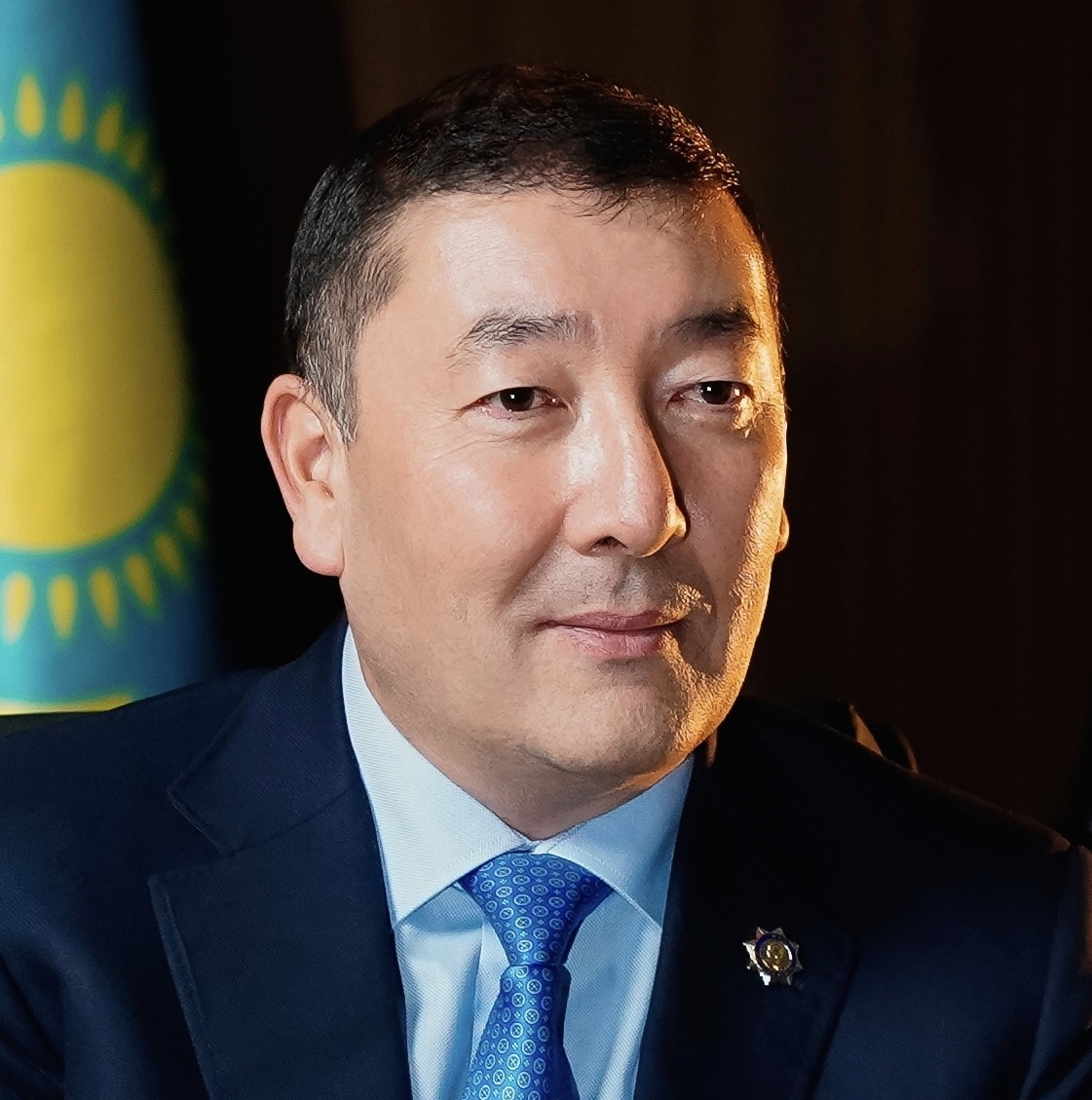
Kanat TIREUOV,
Chairman of the Board – Rector of S. Seifullin
Kazakh AgroTechnical Research University,
Academician of the National Academy of Sciences
of the Republic of Kazakhstan, Doctor of Economics
ABSTRACT
The Agrotechnopark at Seifullin University is a multifunctional innovative platform that combines scientific-technological and production-technological contours, ensuring a seamless connection between the development, approbation, and implementation of agrarian solutions. This platform signifies Kazakhstan's transition from borrowing technologies to shaping its own agrotechnical agenda with entry onto the global stage. Seifullin University is becoming a driver of technological transformation in the agro-industrial complex and the institutional core of the Agro-Hub, evolving from a classical research university into a new type of innovation-entrepreneurial university.
Comments