
Al-Farabi KazNU: From Scientific Potential to Technological Leadership
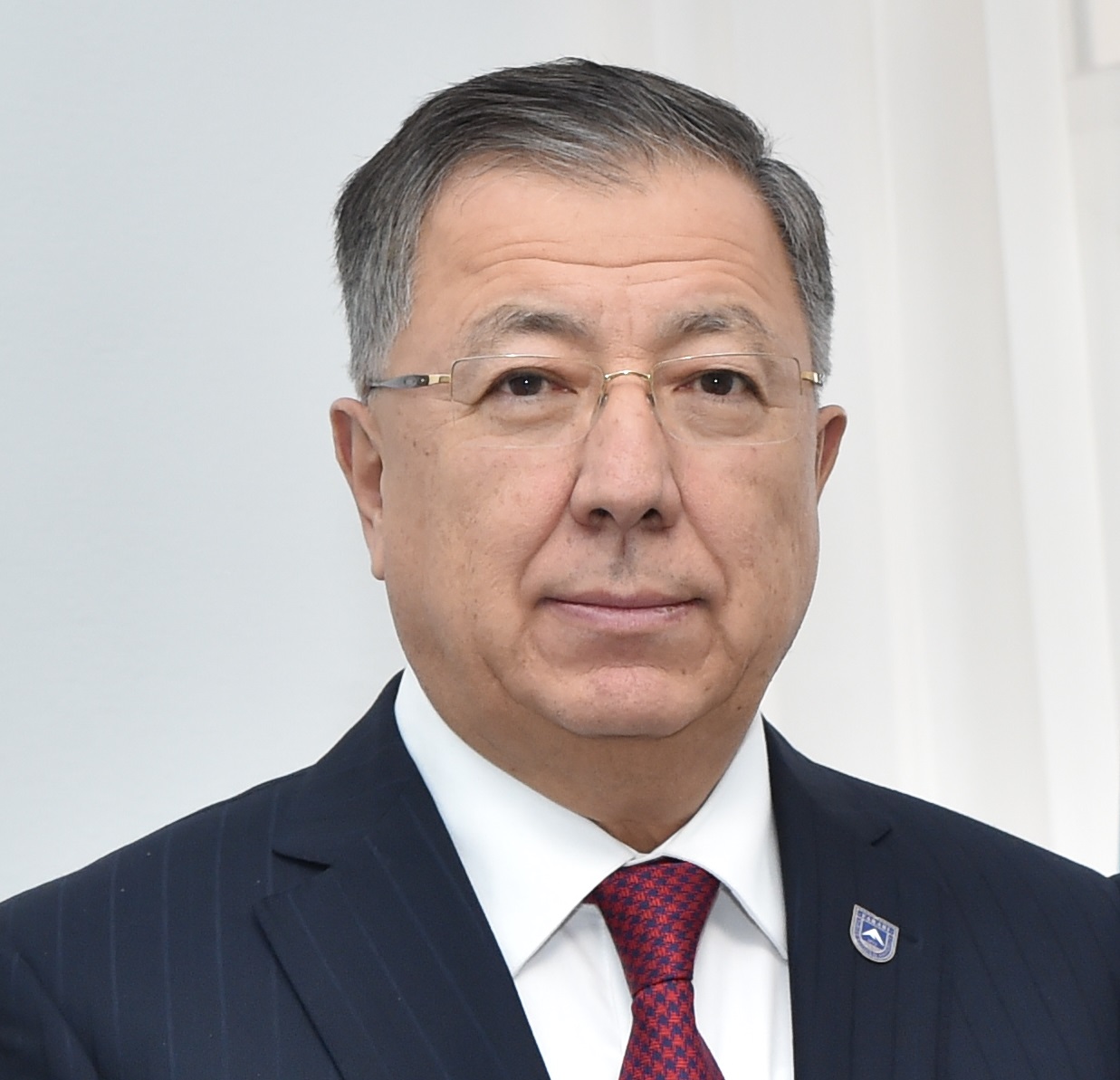

Al-Farabi Kazakh National University is going through one of the most dynamic stages of its development. Receiving the status of a research university in 2022 became an important milestone in KazNU’s history and, at the same time, placed great responsibility on us. The university is consistently updating its educational programs, bringing the results of innovative research into the teaching process, developing digital technologies, making active use of artificial intelligence tools, expanding academic mobility and strengthening strategic partnerships with leading universities around the world. We regard research-university status not only as recognition of what has already been achieved, but above all as a benchmark for further development. Our goal is to build a new-generation university in which education, fundamental and applied science, innovation and entrepreneurship are closely interconnected.
KazNU’s scientific infrastructure includes 8 research institutes, 39 research centers and more than 140 laboratories. The university is carrying out about 400 research projects. Funding for the university’s research and innovation activities has reached 16.27 billion tenge. The volume of the investment attracted by Al-Farabi KazNU amounted to US$110 million. These figures show that the research is becoming one of the key drivers of KazNU’s development.
A significant and landmark event for the university was the visit of the Head of the State on March 19, 2026. On that occasion, Kassym-Jomart Tokayev effectively defined the university as one of the main platforms for the country’s scientific and technological modernization. We introduced the university’s scientific potential to the President and showed him the Center for Innovative Products and High-Tech Projects “Farabi Hub,” created as a modern platform for developing innovations and bringing them to the real sector of the economy.

Within the university’s walls, the Head of the State met with the university’s scientific community, during which he gave a critical analysis of the state of affairs and the problems in the field of science, set important, pressing and new tasks for the country’s scientists, and paid particular attention to the role of research universities.
Touching on the need to radically increase the real economic return on the state investment in science, its commercialization and its transformation into a “productive force,” the Head of the State stressed that science must not be merely an item of expenditure. The main criterion now is real technology transfer to the economy. We told the President that, in line with these strategic guidelines, projects in creative industries, artificial intelligence and startups are already being implemented at the Farabi Hub Innovation Center. 300 new jobs have been created and more than $20 million in investment has been attracted.

At the Farabi Hub Center, we showed the Head of the State our operating supercomputer worth $23 million, aimed at developing artificial intelligence technologies and performing complex scientific calculations with Big Data. It is among the most powerful computing systems in the region.
Information was also presented that the university is successfully implementing four large projects with a total value of 1.25 billion tenge. The President was shown a model of a microsatellite developed jointly with the Northwestern Polytechnical University in China. In addition, scientists from the two universities are working on the NKSAT satellite, designed to measure the Earth’s gravitational field and radiation levels and to do geological exploration.
In implementing the President’s instruction to strengthen the “university–enterprise” link, we are actively developing cooperation with leading international technology companies. Today, joint research platforms with partners such as ZTE and BASF operate at Farabi Hub and KazNU’s research institutes.

Together with ZTE, we are carrying out projects in telecommunications, digital transformation and next-generation network technologies. This allows us to educate students to work with modern equipment, including 5G technologies and cloud solutions.
Last year, together with BASF, the BASF Mining Solutions laboratory was opened, which conducts applied research for the mining and metallurgical complex. Its work is aimed at improving the efficiency of mineral extraction and processing, and students gain an opportunity to master advanced technologies directly in the course of their studies.
KazNU is home to the first specialized scientific and educational center of its kind in Central Asia – the Brain Institute, founded in 2018 as the Center for Cognitive Neuroscience and reorganized into a research institute in 2026.

Its structure includes laboratories of cognitive neuroscience, MRI, neurolinguistics and computational neuroscience. Research here is conducted on the world-class modern equipment, including ANT Neuro high-density electroencephalography systems and functional near-infrared spectroscopy technologies. In addition, the 3 Tesla magnetic resonance imaging scanner installed at the center, integrated with artificial intelligence technologies, makes it possible to shorten scanning time, improve image quality and perform functional MRI.
Another important area is a specialized center for training operators of unmanned aerial vehicles and technical specialists for civilian sectors. It will train personnel for agriculture, environmental monitoring, geodesy and emergency warning systems. At the same time, university scientists, together with the company’s engineers, are working on adapting drone software and design solutions to Kazakhstan’s climatic and landscape conditions.

Artificial intelligence is among KazNU’s priority areas of development today. The university takes an active part in the national AI-Sana program. Thousands of students and faculty members have completed training in the fundamentals of artificial intelligence, generative AI and prompt engineering. At the same time, our goal is much broader than training users of modern technologies. We aim to create our own scientific solutions in artificial intelligence, big data analysis and high-performance computing. The university is doing a megaproject to create KazLLM, a large language model for the Kazakh language, together with the country’s leading scientific centers, within which KazNU contributes to building specialized datasets.
KazNU’s Quantum Breakthrough
The Head of the State Kassym-Jomart Kemelevich Tokayev, in his address to the National Council on Science and Technology, stressed: “We need a scientifically grounded vision for the development of the key sectors of the economy. A special role here belongs to the academic science. We need to build a strong scientific and technological framework for the country, introduce artificial intelligence and advance research in the most cutting-edge fields, including quantum technologies.” The President defined this strategic guideline as one of the main conditions for ensuring Kazakhstan’s technological sovereignty and long-term competitiveness.

In carrying out the large-scale tasks set by the Head of the State, Al-Farabi KazNU is consistently transforming into a world-class research university.
Just a few years ago, quantum computing was perceived as a field of purely theoretical physics, but today it is becoming the epicenter of global scientific and technological rivalry. In response to the challenges of the times, our university is steadily building an innovation infrastructure capable of bringing domestic science to the forefront in supercomputing, cybersecurity, materials science and artificial intelligence.
The development of supercomputing capacity, robotics and artificial intelligence has naturally led KazNU’s scientific school to mastering the most complex and promising area of modern science – quantum technologies. If the university’s large-scale research infrastructure creates a common technological base, quantum physics and quantum computing become its new, high-tech vanguard.
Today the United States, China, the European Union countries and Japan are investing billions in the development of quantum science, objectively recognizing it as a key factor in scientific and technological rivalry in the 21st century. Kazakhstan, clearly aware of the scale of this global transformation and relying on the scientific and innovation potential built up at KazNU, is joining the global quantum agenda in a timely manner.

On February 13, 2026, an event of strategic importance took place in the history of Kazakhstan’s science: two large-scale projects were presented at Al-Farabi KazNU – the country’s first quantum computing laboratory, Quantum AI, and the Kazakhstan-Singapore Center for Quantum Technologies. This step marked our country’s fundamental transition from theoretical discussion of quantum prospects to the practical creation of its own research infrastructure, the training of highly qualified personnel and the emergence of a national school of quantum research.
The Quantum AI laboratory, created at the Faculty of Information Technology and Artificial Intelligence together with the international company SpinQ Technology, is today a unique and the only scientific and educational cluster of this kind in Kazakhstan.

Equipping the laboratory with seven portable SpinQ Gemini Mini Pro quantum computing systems based on nuclear magnetic resonance enables researchers and students to work not with virtual simulators but with real qubits. Hands-on mastery of the principles of quantum superposition and entanglement opens the way to solving complex computational problems that are beyond the reach of the traditional supercomputer systems.
This scientific and practical base is focused on fundamental and applied research: from quantum algorithms and quantum machine learning to quantum cryptography and information security methods that are in demand in key sectors of the economy, including finance, medicine and digital security.
The logical extension of this ecosystem was the opening of the Kazakhstan-Singapore Center for Quantum Technologies, created jointly with ASTRASEC PTE. LTD. and the Kazakhstan’s technology company Qubitera.
While the Quantum AI laboratory specializes in computational methods and artificial intelligence, the new center focuses on quantum informatics, photonics, communications and quantum cybersecurity. The practical expression of this work is projects demonstrating quantum-secure communication and the implementation of the program “Quantum Technologies for Secure Communications and Critical Infrastructure,” based on the quantum key distribution (QKD) and ground-to-satellite infrastructure.

Building Human Capital for the Quantum Era
Alongside the development of the infrastructure, the university is building an end-to-end system for training specialists who are unique for our country – qualified researchers and a new generation of “quantum engineers.” The quantum cluster that has been created has become a base for training doctoral students, master’s students and undergraduates who study quantum informatics, quantum cryptography and quantum machine learning (QML) directly on real equipment.
A fundamental milestone in the formation of the national training school was the first defense in Kazakhstan’s history of a doctoral dissertation (PhD) on quantum computing and quantum machine learning, by Aksultan Mukhanbet, whose work was devoted to hybrid pattern recognition algorithms. The steady development of the academic potential continues in the doctoral research of Nurtugan Azatbekuly, aimed at solving a key problem of variational algorithms – the “barren plateau” effect, which blocks the training of quantum neural networks as the number of qubits grows.
The recognition of our young scientists’ high competence is reflected in publications in the authoritative international journals Applied Sciences, Algorithms and Computation, issued by the leading scientific publishers MDPI and Springer. The research covers quantum methods for solving the Poisson equation and heat conduction equations, the creation of hybrid architectures for computer vision, and the development of physics-informed (QPINN) and convolutional (QCNN) quantum neural networks.
The integration of Kazakhstan’s specialists into the global scientific community is supported by direct cooperation with leading world centers – Terra Quantum AG (Switzerland–Germany), Origin Quantum (China), the HUN-REN Wigner Research Centre for Physics (Hungary) and the Russian Quantum Center.
This partnership gives our specialists access to advanced platforms and joint research programs, shaping Kazakhstan’s intellectual elite of the future.

An Ecosystem of Science and Innovation
Today quantum technologies have finally moved beyond purely fundamental science and become one of the main drivers of global scientific and technological progress. According to international experts, their systemic impact on the global economy in the coming decades will be comparable in scale to the digital revolution brought about by the emergence of the Internet and artificial intelligence.
For Kazakhstan, participation in this global technological transformation is not a tribute to academic trends but a pressing strategic necessity. National interests require not a limited import of foreign solutions but the building of our own scientific school, the creation of a modern research infrastructure and the training of world-class specialists. Therefore,
the next logical step in the development of our scientific and innovation cluster will be the launch of the National Quantum Computing Platform. It will give the country’s scientists, doctoral students and engineers remote cloud access to quantum computing resources.
Placing this system alongside such global counterparts as IBM Quantum Network, Origin Quantum Cloud and Terra Quantum TQ42 will substantially broaden the horizons of Kazakhstan’s science and lay a solid foundation for national technological independence.
The applied potential of quantum technologies for Kazakhstan’s economy is hard to overstate. In the oil and gas sector, they can radically improve the accuracy of field modeling, geophysical data processing and the optimization of production processes. The high efficiency of quantum algorithms will be decisive in transport logistics, financial engineering, pharmacology and the creation of materials with specified properties.

Quantum cybersecurity occupies a special place on this agenda. As the state’s digital infrastructure grows more complex, traditional methods of information protection will inevitably exhaust their potential.
The development of quantum key distribution (QKD) technologies and quantum cryptography creates a fundamentally new, absolute level of protection for critically important state and corporate information.
Accomplishing these large-scale tasks is unthinkable without accelerated commercialization of scientific developments. KazNU intends to deepen collaboration with industry leaders, government bodies and high-tech businesses, ensuring the rapid transfer of fundamental ideas into real production.
Human capital remains the central link of this system. A core of talented young people has already formed around our new laboratories. Actively involving master’s students and PhD candidates in real research projects will make it possible to grow a new generation of the national scientific elite.
Thus, a coherent national quantum ecosystem is taking shape within the walls of Al-Farabi KazNU, uniting advanced education, fundamental science, international cooperation and innovative entrepreneurship. It is precisely such breakthrough projects that shape Kazakhstan’s rightful place in the global knowledge economy and ensure the country’s sovereign technological development for decades to come.
Zhanseit TUIMEBAYEV,
Chairman of the Management Board – Rector
of Al-Farabi Kazakh National University
ABSTRACT
The scientific infrastructure of Al-Farabi KazNU plays an exceptional role in ensuring Kazakhstan’s technological sovereignty. The launch of a supercomputer that ranks among the most powerful computing systems in the region, the development of aerospace technologies, neuroscience, robotics and artificial intelligence, the creation of the first quantum laboratory and a specialized quantum center, and dynamic innovation activity make the university a unique research center, affirming Kazakhstan’s status as one of the technological leaders of the region.
Comments