
Mechatronics – a Profession of the Future: аn Interview with a WorldSkills Gold Medalist from ASTANA POLYTECHNIC


One such example is Ramazan Nurlan, a student at ASTANA POLYTECHNIC Higher College, who won a gold medal and the special "Best of Nation" award at the international WorldSkills competition in Australia, as well as a "Medal for Excellence" in Shanghai in the Mechatronics skill.
Participation in the WorldSkills Movement – a Tool for Launching a Career
The international non-profit WorldSkills movement has been actively developing in Kazakhstan since 2014. Every year, the national WorldSkills Kazakhstan championship brings together hundreds of students from all over the country in dozens of skills.
The competitors are assessed by independent experts – representatives of major enterprises and companies. This is a chance to show yourself to a future employer and to receive a job or internship offer while still studying. The tasks at the championships are as close as possible to real production challenges, which makes it possible to objectively assess your level against your peers.
The winners of the national championships earn the right to represent the country at the world championship (for example, Shanghai 2026). A victory at the international level may entitle a student to free tuition at universities. Based on the results of demonstration exams held to WorldSkills standards, students receive a Skills Passport (a competency passport). This document is more valuable for assessment by employers rather than the grades in a diploma. Participation opens up an access to international experience and contacts with experts and young professionals from other countries, which supports further growth in the chosen field.
The editorial team of the magazine “Modern Education” and the bilim.expert portal asked Ramazan what lies behind his victory, how the competition in Australia went, how ASTANA POLYTECHNIC has built its system to prepare champions, and who he sees himself becoming in the future. Separately – his advice to schoolchildren who foresee their professional education ahead of them.
– Ramazan, congratulations on the gold and the special “Best of Nation” award! Australia, the strongest rivals, the international level... Do you remember the exact moment your name was announced? What did you feel in the first second, and who was the first person you shared with the news?
– In the first second, I honestly couldn’t believe it was happening to me. When my name was announced and they said I had won gold and then the “Best of Nation” nomination, it felt as if everything around me had stopped for a few seconds. I felt so many emotions – joy, surprise and, surely, pride in myself, my team and my home college. We had prepared a great deal, there were difficult moments and a lot of nerves. It was especially gratifying to realize that we had been able to represent Kazakhstan with dignity at the international level.
Definitely, I shared the news with my loved ones first. I called my family and said: “We took gold!” I think that was the moment I finally understood that we had done it.

– The name of your skill, “Mechatronics,” sounds very futuristic. Could you explain to your peers and future applicants, in simple words, what it is, what the difference is between mechatronics and classical robotics, what exactly you do, and why it is a profession of the future?
– Put very simply, mechatronics is when mechanics, electronics, programming and automation work together. For example, a robot must not just move – it has to understand what is going on around it, receive information from sensors, make the right decisions and perform a necessary action. This is what a mechatronics specialist does.
Classical robotics focuses on building and programming robots, whereas mechatronics is broader. Here you have to understand the mechanical side, electronics, control systems and programming all at once.
I believe it is a profession of the future because automation is already becoming part of our lives. Manufacturing, transport, healthcare, energy – smart automated systems are essential everywhere. And specialists who understand several technologies at once will be in very high demand.
For me, mechatronics is also an opportunity to keep learning something new all the time. What I like is precisely that it is impossible to simply know one subject well here. At competitions you have to be able to assemble, program, configure, troubleshoot and make decisions instantly. Sometimes something doesn’t work, and you have very little time to understand the reason and fix it. And that is probably the most interesting part.
– You have an experienced mentor, Samir Piriyevich Kerimov – Deputy Director for Information Technology at the ASTANA POLYTECHNIC Higher College, and an international expert and coach of the national team in the Mechatronics skill. Tell us how the competition in Australia went. What challenges did you have to face? How did you and Samir Piriyevich manage to organize your work so as to outperform the best specialists from around the world?
– The competition was very intense. When you are at the venue and realize that there are participants from different countries next to you who also came for the win, surely, you feel nervous. But as soon as the work begins, there is no time to think about your competitors – you have to focus as much as possible on your own task. The hardest moments were when something didn’t work on the first attempt. In mechatronics, one small mistake can affect the whole system, so it is important not to panic but to quickly find the cause and fix it. Plus, there is a time limit at competitions, and you have to work very fast without losing accuracy.
Samir Piriyevich and I built our work as a team from the very beginning. During the training, he didn’t just show me how to do things correctly – he taught me to analyze the situation and make decisions on my own. We trained a lot in conditions as close to the competition as possible: we set ourselves time limits, analyzed mistakes, and after every training session understood what could be improved. During the competition this helped enormously. I knew what to do first, how to allocate my time and how to act if an unexpected situation arose.
We didn’t set out to outdo everyone. We tried to do our work to the highest possible standard. And when the result was finally announced, it became clear that this strategy had worked.
This victory is not my personal achievement. It is months of preparation, the support of Samir Piriyevich, the team, the college and everyone who believed in us. Gold in Australia is the result of a great joint effort.

– How did you first get to know the WorldSkills movement? Did you plan to take part in such championships when you enrolled at the ASTANA POLYTECHNIC Higher College, or did this path open up only while you were studying?
– To be honest, when I enrolled at ASTANA POLYTECHNIC, I didn’t even imagine that a few years later I would be taking part in international competitions. At first, WorldSkills was just the name of a championship I had heard about at college.
It all started in my second year. I decided to try my hand and passed the selection for the college team in the Mechatronics skill. At first, surely, it felt unfamiliar: tasks, strict time limits, constant work on mistakes. But gradually I became genuinely interested and realized that I wanted to keep going.
The first big milestone for me was the WorldSkills ASTANA city championship, where I managed to win. After that I realized I needed to set more serious goals for myself.
The next stage was the national championship. The level of competition there was already much higher, and I gained very valuable experience of working under strong competition and great pressure.
When I first learned that I would be representing Kazakhstan at international competitions, it was hard to grasp the scale of it. There you compete against participants from different countries and understand that you represent not only yourself and your college, but your country. In Australia, when we managed to win the gold medal and the special “Best of Nation” award, I realized how far you can go if you constantly work on yourself.
Our journey is continuing now. We are already preparing for the WorldSkills world championship in Shanghai, and we are even more training and even more working on speed, accuracy and non-standard situations.
Looking back, it all started quite simply – I just decided to try the selection in my second year. And then each stage opened the next one. So I would definitely tell first-year students: if you are offered a chance to try yourself in championships, competitions or projects – don’t be afraid. Sometimes a single decision like that can completely change your trajectory.
– Tell us about the labs and equipment at the college, what you trained on, and how closely the conditions at ASTANA POLYTECHNIC match the very high world standard you saw on the international stage?
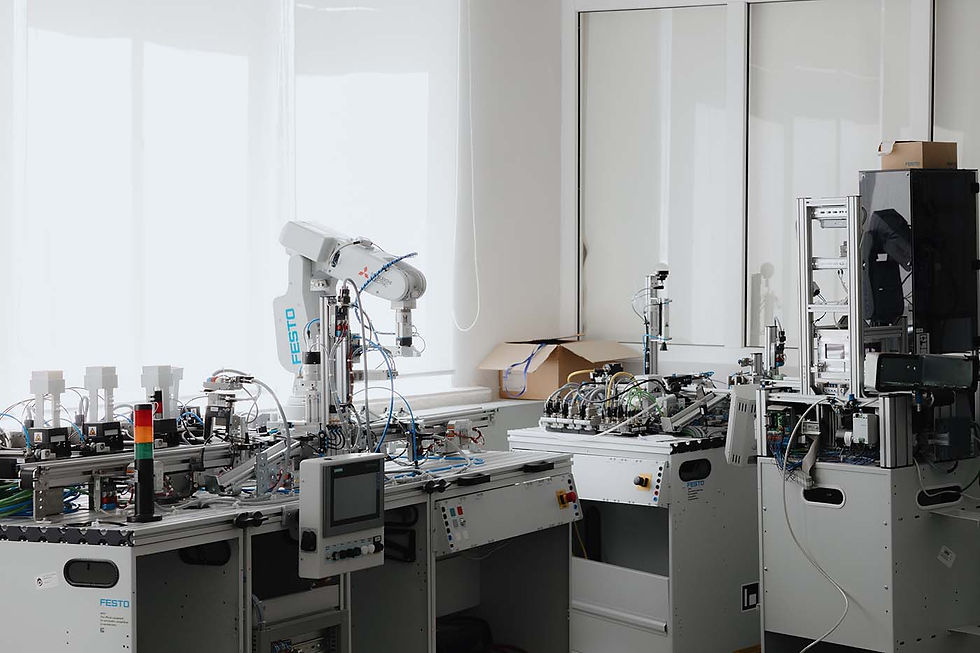
– I did most of my preparation in our college’s mechatronics laboratory. We have modern Festo equipment, including MPS modular production and training systems, which allow us to practice real industrial automation processes: pneumatics, electronics, the operation of sensors and actuators, programming and system control. This is exactly the type of equipment used to prepare for the WorldSkills competition in the Mechatronics skill.
It was very important to me that we didn’t just study all this from textbooks. I could assemble a system with my own hands, connect the sensors, set up the pneumatics, program the controller, start up the equipment, and then deliberately look for a fault and fix it. For example, during preparation we could take a production line and practice a specific sequence: feeding a part, detecting it with a sensor, moving it and sorting it. If the system didn’t perform the required action, you had to determine on your own where the problem was – in the mechanics, the wiring, the sensor or the program. These training sessions helped me a great deal later at the competition.
In Australia, when I saw the equipment and the way the work was organized at the international venue, I didn’t feel like I had landed in a completely unfamiliar world. Surely, the level of the competition was much higher, the tasks were harder and the psychological pressure was enormous. But the equipment itself and the logic of working with it were familiar to me thanks to my preparation at the college.
I would say that one of the main advantages of ASTANA POLYTECHNIC is the opportunity to work constantly with the equipment that is as close as possible to real production. Festo positions its MPS systems precisely as a platform for practice-oriented training and education in automation and mechatronics.
The college laboratory is, in effect, the place where my international preparation began. It is where I first learned to understand a system, look for an error and find a solution on my own.
And probably the most important thing is that the equipment on its own doesn’t produce results. It gives you a chance to train. And then it all depends on how much you are willing to work, how many times you are willing to make mistakes, analyze the mistake and try again. That is how you gradually build the confidence with which you later step onto the international stage.
– How is the system of preparing champions organized at the college? How hard is it to combine an intensive training schedule with the regular study process, and how do teachers support students who are aiming for world-class results?
– Combining studies and training isn’t easy. After classes we often stay in the laboratory for several more hours, but you gradually get used to such a schedule. Besides, the knowledge from regular classes directly helps in training.
My mentor, Samir Piriyevich Kerimov, played a major role in my preparation. As an expert, he works through every possible situation with me and deliberately creates faults, where I have to find the cause myself and eliminate it within a limited time. He teaches me to analyze a situation on my own and make decisions.
The college’s teachers support us. Participation in championships – is part of professional development, and preparation for WorldSkills – is not something separate from studies, but an opportunity for students to apply their knowledge in practice and reach the international level.
– Who do you see yourself becoming in the future? What projects or fields would you dream of working in, and how do you plan to develop your career?
– Recently, almost all my attention has been occupied by preparing for the WorldSkills World Championship in Shanghai. Looking ahead, I want to work in real manufacturing. I am considering machine-building enterprises in Kazakhstan that have modern automation, production lines and robotic systems. I would be interested in work, for example, at a company that builds railway equipment or other complex industrial products.
I want to apply my knowledge not only at competitions, but to come to a production site and, in real conditions, configure equipment, find faults and improve production processes. At the same time, I am planning to continue my studies at university and develop as a mechatronics engineer.
– Your gold medal has proved that ASTANA POLYTECHNIC students can be the best in the world. What would you advise schoolchildren who are now thinking about enrolling at your college and may doubt their abilities?
– I would say the main thing: don’t decide in advance what you are capable of and what you are not. When I enrolled at ASTANA POLYTECHNIC, I didn’t think either that I would one day represent Kazakhstan at international competitions. It all begins with a simple try. You sign up for a competition, come to a training session, stay after classes, make mistakes, try again. At some point you realize that you can already do much more than you used to think. So, if you are doubtful now, I would advise you not to be afraid to take the first step.
The college gives you opportunities, but the result depends on how ready you are to make use of them.
Here you can get a modern, in-demand profession, find your direction, join a team, participate in championships and even represent Kazakhstan on the world stage.
Photo by Karina Erik
АННОТАЦИЯ
In the course of the interview, Ramazan Nurlan, a student of the ASTANA POLYTECHNIC Higher College, gold medalist of the international competition held in Australia in the Mechatronics skill and winner of the special “Best of Nation” award, shares his experience of taking part in the WorldSkills movement. He tells the story of his path, from selection for the college team to competitions at the international level.
Comments