
AI in Education: Real-World Practice


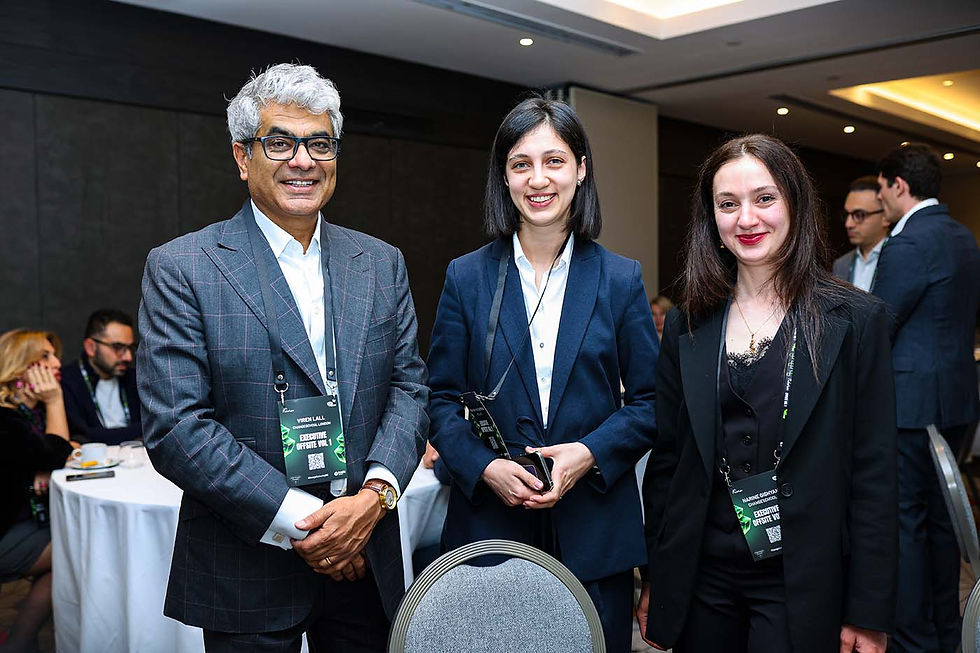
The initial stages of integrating artificial intelligence into teaching and management – characterized by a widespread craze, chaotic experimentation, a lack of expertise, attempts at bans, and data leaks – are gradually becoming a thing of the past. The educational system is seeking ways to restore its lost equilibrium while maintaining the momentum generated by these new technologies. A clearer understanding is emerging of where they pose risks and where they bring value. In this interview, Viren Lall, Managing Director of ChangeSchool, shares British and international insights into building a new educational architecture.
– Mr. Lall, we would like to know Your opinion as an expert with extensive experience in university governance on what AI readiness means for a higher education institution.
– Thank you for the opportunity to share my observations. The patterns I will describe are based on British and international experience, and they are universally applicable: educational institutions in your region are working on the exact same issues as our clients.
Many organizations confuse structure with readiness, a pattern that is also visible in higher education. The Global Risk Report 2026 by Sedgwick presents the results of a survey of 300 top executives from Fortune 500 companies. The survey showed that while
70% of companies have AI risk committees and governance structures, only 14% actually consider themselves ready for AI implementation. The same gap manifests in the higher education sector.
When considering risks, universities typically focus on AI bias when delegating recruitment and grading to it. For instance, during admissions, an algorithm might filter out good candidates simply because there were few people of a specific gender, age, or from certain regions in the training data. For example, if a university uploaded data of successful professors over the past twenty years, and historically most of them were men over forty-five, the AI will conclude that the ideal candidate must be of this age, and the rest can be filtered out. When grading papers, AI can assign marks based on hidden biases embedded within it. For example, if a model was trained on strict academic English, it might lower the grade of a student who wrote a brilliant paper in terms of meaning but used a slightly simpler, more lively language or phrasings characteristic of international students. Based on its database, the AI will consider this an "error" or "poor style."

But we must also pay attention to the impact of artificial intelligence on the learning process itself.
Readiness has three specific indicators that are evident without unnecessary talk about strategy.
The first is an up-to-date registry of processes where AI is already involved: every model, every dataset, every decision it influences. Many universities cannot compile such a list.
The second is measuring outcomes rather than tracking activity. Board reports usually state: "We are launching AI pilots in three areas." In contrast, those 14% of organizations that are genuinely ready to work with technology report concrete numbers: "AI improved student retention by 3.2%, with a margin of error under 1%."
The third is governance embedded into the workflow: control checkpoints for approval at every stage of technology deployment.
– What AI processes can already be automated in the admissions office and in tracking student progress, and what does the British experience teach us?
– The most mature British examples from a practical application standpoint are long-running analytical systems that identify students at risk of dropping out or receiving unsatisfactory grades, signaling instructors to intervene in time.
Generative AI and its large language models have almost nothing to do with this.
These systems have been based on standard machine learning for many years – just as the Turnitin.com platform has long been used to check papers for plagiarism.
The OU Analyse system at the Open University UK, a world leader in distance learning, weekly assesses the probability of a student failing the next assignment and sends a list of students from the highest-risk group to tutors. This system has been operating successfully across the entire institution for many years, helping to measurably reduce student dropout rates.

Nottingham Trent University, one of the UK's largest and most innovative public universities, uses an electronic dashboard built on student engagement signals: it tracks logins to the virtual learning environment, library visits, class attendance, and electronic ID card data. If a first-year student shows no activity for ten days, the system automatically sends a notification to the tutor. This solution is used by approximately 30,000 students and 1,500 staff members.
The British admissions service, UCAS, operates at a national level and checks every personal statement for similarity against past applications and massive databases of existing texts. Crucially, UCAS fundamentally does not use AI detection software, considering it unreliable. For educational institutions looking to adopt this experience, the main lesson lies in the proper organization of the process itself, rather than the sophistication of the software used.
A simple system that generates a daily alert about a student's inactivity, combined with a designated staff member ready to help immediately, works far more effectively than a highly complex intelligent model whose conclusions ultimately nobody uses in practice.
The British experience holds an important caveat: much of the published data is correlational – the positive effect depends equally on the technology and on the changes in the behavior of the tutors themselves. Analytics are necessary. But they are not sufficient.
– Are "whitelists" of approved software still relevant? How should a university build its AI governance architecture?
– Any "whitelists" of approved software become obsolete within 90 days – technology develops too quickly. The real question is what operational regulations the university runs on every day. For instance, the AI Operating Charter model developed by ChangeSchool (www.virenlall.com/ai-operating-charter) offers four layers of governance that any university can build.
The first layer is inventory. This is a constantly updated registry of all AI systems used in the university – regardless of whether they have official licenses, were introduced by a third-party vendor, or are a personal experiment by an individual instructor. You can only manage what you can see. The protection of students' personal and biometric data is embedded right here. When the registry works, data protection becomes one of several filters that every system must pass through.
The second layer is the differentiation of rights: who has the authority to approve AI use, who must be consulted, and who escalates controversial issues to top management.
The third layer is handling exceptions. Instructors will experiment with things that go beyond general rules anyway.
And this path of legitimate exceptions is more important than rigid bans, because it is precisely in these independent experiments of educators that the university's real innovative experience is born.
The fourth layer is regular auditing. These are quarterly reviews of actual AI performance outcomes, which replace formal annual declarations on ethics.
Professor Julian Birkinshaw, under whom I studied at London Business School and who is now Dean of the Ivey Business School, expresses a matching thought: learning always requires overcoming difficulties. The main managerial question is where exactly to place these difficulties. Proper intellectual resistance should be built into the learning process itself, whereas official circulars and prohibitions are too blunt an instrument.
– Can grading be trusted to artificial intelligence? Is the opinion about AI bias well-founded?
– The initial assumption that AI-assisted grading is biased while human grading is absolutely objective does not hold up to scrutiny. Having served on the jury for the EFMD (European Foundation for Management Development) Excellence in Practice international awards, I can tell you that human examiners are subject to far stronger subjectivity. A human's grading is influenced by everything: the time of day, fatigue, personal preferences, and even the "halo effect," where a student's reputation unconsciously leads the examiner to raise or lower the mark.

An effective system is a continuous interaction between human and machine, not the replacement of one by the other. The AI generates a preliminary grade based on clearly defined criteria. The instructor reviews and adjusts it. These corrections are fed back into the system, allowing the AI to learn and become more accurate each time. Over time, this combination delivers a result that is far more objective than if either were grading alone. Furthermore, AI excels at providing detailed feedback. It instantly generates a comprehensive written breakdown of a paper for the student – instructors rarely have the time or energy for such detailed comments.
A colleague of mine, with whom I co-taught on an Executive MBA program 15 years ago, is now a professor at a leading business school in Tokyo that trains students with a high emphasis on practice, and they have been successfully using AI for grading for over five years. The appeals procedure remains simple: if a student disagrees with the result, they have the opportunity to contest the system's decision, since a live examiner is always present in this system.
– What changes in an instructor's work when AI enters the classroom?
– The role of the instructor shifts from content delivery to designing student engagement around that content. Two practices we use in leading educational institutions clearly illustrate these changes.
The first practice is debate based on the synthesis of readings. Students receive a list of sources and bring a summary to class: what they took away from the texts and what remained beyond their understanding. Then, the instructor creates a thematic synthesis, highlights what the group missed, and uses this gap to drive a two-way discussion.
The teacher is no longer the primary source of knowledge.He is a moderator of a dialogue moving at a much higher speed.
The second practice is so-called "forced recall," which is applied as a written test on paper. Every class opens with a simple question. A student receives two points for a correct answer with a quote; one point if the essence is correct but the quote is missing (or vice versa: the quote is accurate but the content is lacking); zero points if the answer misses the mark. Anyone with minimal preparation can get a top mark. The essence here lies in the culture of preparation that follows: when students know that their knowledge of the material will be checked at every session, reading actually happens, and the discussion starts from a common baseline for everyone.

The results are reflected both in student satisfaction and their academic performance: prepared students do better and say so themselves. This is "The Gaussian Challenge" (www.virenlall.com/gaussian-challenge-ai) applied to pedagogy. A typical AI-style step is to make a quick summary of the reading for the student. The "Gaussian reimagining" flips the speed factor: the assimilation of material is not accelerated with AI, but rather intentionally slowed down to force the student's own brain to work. If we forget about the existence of technology for a moment, how do we verify that reading actually took place? The most reliable way is to ask students to reproduce the acquired knowledge on paper. An instructor (or their assistant) can grade such work manually in a matter of minutes using a very simple scale. AI is intentionally left out of this loop because the goal of the loop is to bring out what AI would otherwise shortcut: the reading itself and the discipline of preparation.
Artificial intelligence has commoditized content, turning information into a publicly accessible resource. But what it hasn't touched – and likely never will – is the live intellectual enrichment during a well-structured discussion among prepared students. It is in these moments that understanding turns into application.
The shift the academic community faces today is a transition from the role of knowledge transmitters to the role of learning mentors.
This step requires instructors themselves to be ready for internal growth and development (https://www.virenlall.com/growth-mindset-for-ai). They will have to learn alongside their students, openly demonstrate this process, and accept the fact that the traditional, unquestioned authority of a lecturer no longer works as it used to. Now, the value of an instructor lies in the ability to set the right frameworks: choosing which specific questions the audience works on, highlighting where the students' synthesis contradicts the primary source, and noticing in time when simple reproduction matures into conscious mastery of the material.
Professor Julian Birkinshaw, along with his colleague from Ivey Business School, Mazi Raz, recently published a study on what they call "Structured Social Learning." This is about the intentional organization of a peer-to-peer (P2P) format as a pedagogical counterweight to students' attempts to "cut corners" using AI. In essence, it is the same idea, but presented through the lens of scientific research.
If a university trains its staff to use AI tools but ignores this change in role, technology begins to amplify the wrong things. It merely accelerates the transmission of content that AI has already made mundane and accessible to everyone.
– How do we turn the isolated experiments of individual instructors with AI into a system that works across the entire university?
– Today, many instructors are experimenting with AI in their classes on a private basis. But the main challenge for higher education is to turn this scattered personal experience into a collective, systemic competence of the institution.
Here, the earlier work of Professor Julian Birkinshaw on contextual ambidexterity (Gibson and Birkinshaw, 2004) – the ability of employees to independently and flexibly balance two opposing tasks: current operational efficiency and the implementation of innovations – is highly useful. This work provides us with an organizational model: employees explore new technologies within their core work, while the institution simultaneously leverages existing capabilities. These two functions are held in productive tension by the very design of the workflow, rather than by the forces of a closed "secret lab" or a separate special department. His later thesis that the case method gains greater importance in a world of generative AI gives us a pedagogical model. Together, they describe how a modern university can scale.

The practical mechanism here is a regular rhythm of structured peer-to-peer learning.
Instructors meet, share what they have tried, identify what proved viable, codify successful practices, and discard those that did not work. Julian Birkinshaw himself taught on ChangeSchool's Executive Education programs for the Gulf countries, where we applied this rhythm of work.
Institutions that successfully scale AI teaching are those that have the best-functioning procedures for gathering individual experiments into shared practice. The brilliant experience of individual classrooms spreads only when such mechanisms exist.
– What does an AI-ready graduate look like, and are universities capable of keeping up with these changes?
– The World Economic Forum's Future of Jobs Report 2025 provides dry figures: about 39% of employees' existing skills will change or become completely obsolete by 2030. Among the top three most in-demand competencies are exclusively technological ones: AI and big data, cybersecurity, and digital literacy. But side by side with them are purely human qualities – resilience, curiosity, and lifelong learning. At the same time, critical thinking invariably remains the main foundation.
An AI-ready graduate has six clearly identifiable core competencies:
They know how to learn independently, perceiving their own development as a continuous and natural process.
They use AI as a launching pad to quickly understand any unfamiliar field, rather than sitting around waiting for someone to come and teach them.
They know how to experiment but maintain rigid discipline for the sake of the final result. They possess developed reverse critical thinking, which protects against "confirmation bias" (when a person looks only for facts that fit their hypothesis), and they always double-check their own work.
They do not fall into the trap of "information garbage" (workslop) – meaning they do not generate tons of beautifully formatted, polished texts that nobody will actually read carefully in reality.
They never take AI recommendations on faith without stress-testing them. They always verify the model's logic, its "memory," and the appropriateness of the proposed judgments.
They know how to learn from AI systems and simultaneously train these systems through high-quality feedback – so that both the tool and the person managing it grow in the process.
Our Executive MBA program in Kazakhstan is an Executive MBA in the era of AI, which fully embodies this principle in practice.
Obviously, conventional updating of curricula and programs simply cannot keep pace with the frantic speed of technological development. But universities can keep up with progress differently – by building these very core competencies in students. Then, the graduate will be able to easily adapt and master any tools, no matter what AI looks like by 2030.
Viren Lall is Managing Director of ChangeSchool, a London-based executive-education firm working with universities, business schools and corporate boards on AI in leadership development. Recent ChangeSchool engagements developing CXO programmes for leading UK business schools, an open programme for a leading MENA region business school, and an AI for leaders curriculum that has been delivered for the manufacturing sector, chairs, governors, and the Leaders in Innovation Fellowships Programme for the Royal Academy of Engineering in the UK. ChangeSchool would welcome continued conversations with institutions in the region thinking through these questions.
Interview by Veronika Koreshkova
ABSTRACT
The methods of utilizing artificial intelligence in education are a subject of discussion worldwide. With the emergence of advanced technologies, the role of the educator, the methods of content delivery, and the entire structure of learning are undergoing transformation. Viren Lall, Managing Director of ChangeSchool, shares British and international insights into building a new educational architecture.


Comments