
Developing Human Capital in the Context of Initiatives by the President of the Republic of Kazakhstan


Education is a key pillar of state policy, shaping the human capital, values, and competitiveness of the country. Large-scale reforms and the special attention paid by the Head of State, Kassym-Jomart Tokayev, to the education sector are consistently building a modern, sustainable system. In this system, every child – regardless of their family’s status or place of residence, whether urban or rural – is guaranteed equal access to quality education and a safe environment, while the status of teachers is strengthened by law. At the same time, the education system must respond to the new challenges of a changing global landscape. In an interview with our magazine, the Minister of Education of the Republic of Kazakhstan, Zhuldyz Suleimenova, outlined the ministry's priority areas and shed light on many interesting and pressing issues.
– Zhuldyz Dosbergenovna, following the President's instruction, the "Children of Kazakhstan" concept for 2026–2030 was adopted. What is its fundamental difference from previous approaches, and what are the current priorities in working with the younger generation?
– Policy regarding childhood is moving into a systematic channel. For the first time, under the instruction of the President, all existing measures have been consolidated into a single concept – this represents a strategic consolidation of state policy in the interests of children and a conscious transition from fragmented solutions to a unified, holistic management model.
A child is no longer viewed as an object of care on a residual basis. They are becoming full-fledged participants in state policy. Their safety, development, dignity, and equal opportunities are established as the main priority. It is from this position that further decisions in the spheres of education, upbringing, and social support are derived.
Children are the future of our country. Today, Kazakhstan is home to approximately 6,902,492 children, accounting for one-third of the population. Over the last ten years, their number has increased by about 1.5 million, which creates additional challenges but simultaneously opens unique opportunities for shaping a new generation capable of leading the country forward.
Kazakhstan is one of the few countries where the strategy for protecting children's rights has been defined by the Head of State as a priority direction for societal development.
Following the Head of State's instruction, a law has been adopted under which the "National Fund to Children" program has been implemented since 2024: now, from birth until reaching the age of majority, 50% of the National Fund's investment income is annually credited to the savings accounts of the country's young citizens. Accumulated funds can be directed both toward obtaining education and improving housing conditions.

Over the last three years, ten laws have been passed in Kazakhstan to protect children. A principle of zero tolerance toward violence has been introduced, and responsibility for crimes against minors has been tightened. In 2025, legislation was further updated: administrative fines for violations of children's rights were introduced, the functions of regional authorities were solidified, requirements for guardians were strengthened, and new state control mechanisms were established.
Practice confirms the effectiveness of these measures. The number of guardianship authority specialists has increased from 303 to 1,028, which has made it possible to shift from formal control to targeted work with families. The introduction of the digital contact center "QR-111" has increased the number of appeals, and the anti-bullying program "DosbolLike" has reduced the level of bullying by 2.5%. A departmentally coordinated algorithm for responding to cases of violence, bullying, and cyberbullying has been developed, allowing for timely identification and assistance to victimized children. "Safety lessons" are conducted in all schools (over 1.4 million sessions), covering every educational level.
Bullying and cyberbullying remain hidden risks; according to UNICEF estimates, without preventive measures, digital aggression could grow by 10–15%. Global practice shows that countries investing in early risk detection, prevention, and digital monitoring reduce social costs by 30–40% and increase the efficiency of budget expenditures.
The system of inclusive and special education is actively developing. Today, there are 237,000 children with special educational needs in the country, of whom more than 213,000 are covered by special psycho-pedagogical support, and 17,000 have been organized for individual home-based learning based on the conclusion of a medical-consultative commission.
Over 11,000 special educators work in educational organizations, and 6,500 children are covered by individual accompaniment from teacher-assistants. There are 537 special educational organizations in operation.
In the sphere of nutrition, sanitary conditions, and child safety, a new nutrition standard has been introduced, and control over food quality and the sanitary condition of canteens has been strengthened.
It is also worth noting that the voucher financing introduced in preschool organizations, where money follows the child, has allowed for halving the queue for kindergartens and saving over 21 billion tenge in budget funds. Currently, there are about 1 million pupils in 11,900 preschool organizations and over 163,000 children in preparatory classes.
According to forecasts by the National Bureau of Statistics, by 2030, Kazakhstan’s child population could grow to 7.5–7.7 million, which will create an annual demand for 5–7 thousand new student places and 8–10 thousand teachers.
The number of children with special educational needs could increase by 20–25%, which will require the expansion of the network of special organizations and the training of personnel in this profile.
To prevent these challenges, the state is expanding educational and inclusive infrastructure, providing psychological support, conducting work on the prevention of bullying and cyberbullying, increasing the number of special organizations, and training teacher-assistants.
– The issue of the quality of secondary education is relevant for every country. Kazakhstani schoolchildren hold a fairly high standard in various international competitions and Olympiads. A solid foundation of knowledge gained at school expands the range of choices for further education and largely ensures success in a profession. What is your department focusing on in this important segment?
– Kazakhstan is consistently implementing a policy aimed at ensuring that every child receives a quality education. To this end, systemic measures are being taken to support schools, modernize infrastructure, and raise learning standards.
Particular attention is paid to the achievements of schoolchildren on the international stage. Following the instruction of the Head of State, amendments and additions to the law "On Education" have been made to support talented schoolchildren and their teachers. Winners and medalists of international Olympiads, as well as their teachers, receive additional incentives and recognition, creating a stimulating environment for the development of the country's intellectual potential.
Kazakhstani schoolchildren have achieved outstanding results in international robotics competitions and subject Olympiads: they are four-time world champions in robotics, three-time champions in chemistry, absolute champions in scientific physics, silver medalists in geography, and take first places at the Balkan Mathematical Olympiad.

In total, by the end of 2025, 1,720 Kazakhstani schoolchildren took part in more than 30 international subject Olympiads and scientific competitions, winning 1,006 medals. 60% of participants showed high results, including 193 gold, 349 silver, and 464 bronze medals. In seven prestigious international Olympiads, the Kazakhstan team won 27 medals: 4 gold, 13 silver, and 10 bronze. These results confirm that their preparation meets international standards and forecasts for the development of 21st-century competencies (OECD, WEF, World Bank).
State awards totaled 94.3 million tenge, and 24 teachers who prepared the students received 7.2 million tenge.
At the initiative of the Head of State, the National Project "Keleshek Mektepteri" (Schools of the Future) is being implemented, which is the most large-scale and unique project in our country and is aimed at introducing quality educational standards and ensuring the comprehensive development of children regardless of their place of residence.
Under the project, 217 schools for 460,400 student places have been built, including 105 schools in 2024 and 112 in 2025. Accumulated infrastructure problems are being consistently solved in a short time, and new schools are being built, which allows for reducing the deficit of places and improving learning conditions. The problem of 43 three-shift and 8 emergency schools has been solved. The project is managed by the Ybyrai Altynsarin National Academy of Education, which guarantees consistency and quality control.
In addition, in 2025, 50 new schools for 29.6 thousand student places were commissioned at the expense of the budget and private investments. Over the last three years, 3,000 rural schools have been renovated, and more than a million students have been provided with a safe and comfortable educational environment.
As a result, last year the construction of 184 educational organizations was completed, including 162 schools, 15 additional education facilities, and 7 children's health centers. Modernization was carried out in 209 schools, and 1,192 modern subject classrooms were opened.
By the instruction of the Head of State, historical justice was restored regarding the Abai Republican Specialized Boarding School in Almaty, which has acquired modern, innovative infrastructure. This is a clear confirmation of the "Law and Order" principle and the consistency of state policy in the sphere of education.
Along with infrastructure development, the Ministry of Education is constantly working on the subjects taught in schools. In particular, we are currently reviewing a previously adopted decision regarding the "Geography" subject. In the coming period, work will be carried out to return geography to the status of a compulsory discipline and to teach "Geography of Kazakhstan" in full.
– How do you assess the level and potential of teachers in Kazakhstani schools, and at the same time, their working conditions?
– The quality of secondary education and the formation of an intellectually developed generation depend directly on the human resource potential of schools. Attracting talented teachers to schools and creating conditions for them to work is a strategically important issue.
The international study TALIS 2024 (OECD) demonstrates positive changes in the Kazakhstani education system. The average weekly workload of teachers decreased from 50 hours in 2018 to 36 hours in 2024, which is a unique indicator among OECD member countries. At the same time, 95% of teachers are satisfied with their work, and 80% say that if they were choosing a profession again, they would choose to be teachers.
One vivid example of international recognition for Kazakhstani teachers is the inclusion of chemistry teacher Tatyana Gennadyevna Belousova from Almaty in the top 50 best teachers in the world according to the Global Teacher Prize 2025–2026. The Head of State noted this educator's contribution as a symbol of high skill, dedication to the profession, and care for the future generation, which confirms the prestige of the teaching profession and recognition of its enduring value.

In line with the execution of the Head of State’s instructions, work is underway to improve legislation with the aim of protecting teachers' rights and preventing them from being held accountable for matters outside their direct competence.
The Ministry of Education will continue to strengthen a complex of measures to assist teachers in their professional development, including centralized training and retraining programs for teachers and school principals regarding digital literacy and modern educational standards, mentorship programs, and support for young specialists, transparent career tracks, as well as raising the prestige of the profession through international internships, awards, and public recognition.
The implementation of these measures will allow for attracting and retaining young, qualified teachers, increasing professional engagement and teacher motivation, improving student results, and creating a sustainable national intellectual capital that will ensure the competitiveness of the Kazakhstani education system on the international stage.
– "Education without upbringing is the worst enemy of humanity," as Abu Nasr al-Farabi said. In the conditions of globalization and digital challenges, how can we form in children that very inner moral core that the great thinker spoke about?
– Educational work and additional education are key factors in forming a personality capable of adapting to the challenges of the 21st century. They ensure the development of civic responsibility, work ethics, social activity, legal and ecological culture, critical thinking, cooperation skills, and sustainable behavior.
International experts and forecasts suggest that over the next ten years, the educational systems of leading countries will increasingly integrate educational and value-based components, viewing them on par with academic knowledge as a strategic resource for human capital development.
In Kazakhstan, the "Adal Azamat" (Conscientious Citizen) program is aimed at forming a holistic system of values in schoolchildren, the leading ideas of which are independence and patriotism, unity and solidarity, justice and responsibility, law and order, diligence and professionalism, creation and innovation. It implements a value-competence approach, ensuring not only the theoretical assimilation of values but also practical application through the educational process, project activities, extracurricular events, clubs, sports sections, and organizations.
In the educational and upbringing process, priority is also given to the formation of legal and ecological culture, which corresponds to the national initiatives "Taza Qazaqstan" (Clean Kazakhstan), "Law and Order," and "Enbek Adamy" (Man of Labor).
In the 2025–2026 academic year, a pilot project on forming law-abiding behavior and preventing violence, bullying, and unlawful actions is being implemented in ten schools and three colleges in the Talgar district of the Almaty region. The successful implementation of the project will become the basis for mass adoption in other regions.
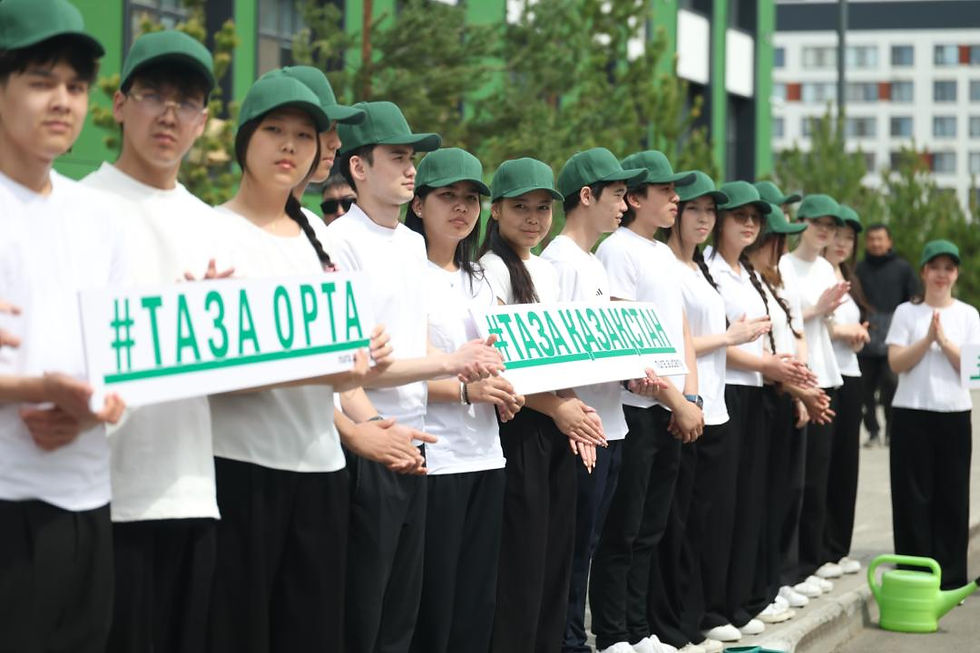
Simultaneously, a Unified Standard for Ecological Education is being developed, which will allow for the systemic integration of ecological competence into the educational process and upbringing work. Currently, "Green Eco-Clubs" operate in 40% of schools, and by 2026, it is planned to increase coverage to 60%, which is consistent with international practices of involving schoolchildren in ecological initiatives and developing sustainable behavior.
Crucial in a child’s upbringing is the role of parents. An effective combination of family upbringing and the systematic work of the school allows for raising a conscious and responsible generation. The "Adal Azamat" program actively contributes to strengthening the link between school, family, and student, which is confirmed by global experience: studies in Asian and European countries show that parental involvement increases the effectiveness of educational initiatives and the sustainability of formed values.

For the holistic development of the personality, it is important to develop the creative potential inherent in every child. According to regional education departments, in 2025, 3.5 million children were covered by clubs and sections in 380 directions. From June 1, 2025, a pilot project on a unified state order for additional education started in the cities of Astana, Shymkent, Atyrau, and the Aktobe, Karaganda, and Kyzylorda regions, within which 1,804 service providers were audited, violations were identified, and the "one voucher – one child" principle was introduced. The results of the pilot will be summarized in September 2026, after which it should be implemented by other regions to ensure equal access to additional education for all children.
The "Adal Azamat" comprehensive educational program, pilot projects on legal and ecological culture, involving children in additional education, and integrating the family into the upbringing process create conditions for forming a generation ready for the challenges of the 21st century, possessing critical thinking, social skills, civic responsibility, and sustainable values.
– The Head of State declared 2026 the Year of Digitalization and Artificial Intelligence, setting the task of making Kazakhstan one of the regional leaders in this sphere. What does this mean for the education system?
– Artificial intelligence and digital technologies offer the opportunity to increase the productivity of educational systems by 10–15% by 2030 through the automation of routine tasks, analysis of educational data, and personalization of learning. The school ceases to be exclusively a place for the transfer of knowledge and becomes a space for forming competencies necessary for the digital economy, including critical thinking, project-based learning, and working with information.
In Kazakhstan, the digitalization of education began with the development of curricula for the subjects "Digital Literacy" and "Informatics" for grades 1–9, which created the foundation for forming digital skills and understanding the principles of how intellectual systems work.
The creation of a National Educational Database on the "QazTech" platform will allow for the formation of digital student profiles, the construction of individual educational trajectories, and the increase of student engagement and the quality of material assimilation.
The platform will unite educational services and public services, and AI agents will help teachers optimize routine processes and focus on the development of each student.

Work has begun on implementing the "Qazaq Digital Mektebi" project, which is aimed at reducing the digital divide between urban and rural schools. Domestic AI tools like Roqed AI, Kashgari, Stem-solutions, the testter.kz system, and Artisan Education platforms are already being applied. The experience of schools No. 107, 101, 99, and 104 in Astana shows that the introduction of AI eases teachers' work, increases the efficiency of assignment checking, and opens new opportunities for students.
Preparing teachers to work with AI is a priority. In 2025, online courses were posted on the "Orleu" platform, which were completed by over 240,000 teachers. In 2026, as part of the "ChatGPT Edu" project, over 200,000 teachers will learn to create their own AI assistants to reduce routine workload. These programs cover all levels of education – from preschool to technical and vocational.
Cooperation with MIT in the "Day of AI Qazaqstan" project is aimed at increasing the AI literacy of schoolchildren and preparing teachers to teach the foundations of AI. Plans include updating school subjects with AI integration and creating an AI basics course for parents to increase their involvement in children's digital education.
The complex of these initiatives makes the educational process more technologically advanced.

Forecasts show significant growth in digital education and AI tools: the global market for AI in education will grow from 2.5 billion US dollars in 2023 to 32.3 billion US dollars by 2030, and by 2035, it could exceed 400 billion US dollars.
More than 80% of educational platforms by 2030 will use adaptive AI algorithms for personalizing the learning process.
AI will become a key factor for the formation of new professions, changes in the structure of the labor market, and the development of digital competencies across all generations.
The integration of AI into the education system supports national priorities: forming a generation ready for the digital economy, developing critical thinking, project skills, and digital literacy, as well as creating modern educational infrastructure and personalized learning trajectories. This reduces the digital divide between urban and rural schools, increases the accessibility of technologies for all regions, and forms a unified digital educational space.
– The past Year of Working Professions focused society's attention on the prestige of technical and vocational education. What progress has been made over this year, and what are the current challenges in this sphere?
– On a global level, vocational and technical education is gradually coming to the fore as a key tool for preparing specialists for a high-tech economy.
Trends in its development include the integration of practice-oriented and digital skills, such as automation, robotization, artificial intelligence, and data analytics; a flexible modular structure of education; and an increase in internationalization through internships, exchanges, and international standards, including participation in WorldSkills championships.

In Kazakhstan, the situation is developing actively. As part of the Year of Working Professions, the state educational order in the country's colleges reached 145,000 places, of which about 70% are directed toward technical and technological fields.
Together with employers, taking into account professional standards and WorldSkills requirements, more than 11,000 educational programs have been developed.
For the first time at the legislative level, norms for online learning for professions in the sphere of information technology were introduced, and opportunities for internal and external academic mobility of students and teachers were expanded.
About 43,000 students are studying under a targeted state order from enterprises, and nearly 8,000 have successfully completed training and are employed. More than 11,000 enterprises are involved in dual education, covering 138,000 students (35%), and more than 4,000 enterprises provide patronage support to 613 colleges. Over the last three years, 650 specialists with industrial experience have been attracted to colleges.
The level of provision for students with dormitory places has reached approximately 90%, and the deficit decreased from 4,066 to 2,017 over the year.
The material and technical base has been strengthened in 187 colleges, eleven educational institutions have passed international accreditation, more than 60 agreements have been concluded with foreign partners, and 500 teachers and 200 students have completed internships abroad.

Kazakhstan held the international championship TurkicSkills 2025 for the first time with the participation of seven countries, which became an important step in raising the prestige of working professions and promoting national experience on the international stage.
The Ministry of Education is strengthening work on involving large business into the educational process: at the moment, out of more than 4,000 enterprises providing support to colleges, only 959 are large companies capable of offering full-fledged internships and production sites for practical training, and this potential will be expanded in the future.
The department will focus efforts on increasing the level of graduate employment in their obtained specialty: with an overall employment rate of about 81%, only half of young specialists work in their profile, which is largely connected with the mismatch between the allocation of the state educational order and the real needs of the regional economy, leading to a shortage of personnel in some spheres and a surplus in others.
It is necessary to take into account global trends, which show that the classic linear system of education is gradually giving way to modular and practice-oriented trajectories. In OECD countries and by the example of global WorldSkills championships, there is a growth in programs where students master specific competencies through short-term courses and internships, rather than through long academic programs, thus managing to keep up with the rapidly changing requirements of the labor market.
To solve current tasks, interaction between the TVET system and industry will be strengthened, ensuring more active participation of both large and small enterprises in the educational process through internships, mentorship, and the provision of production sites;
in parallel, modernization of the material and technical base of colleges will be carried out – creating modern laboratories, workshops, and digital classrooms, introducing modular programs with the possibility of their credit in universities, which in a 5–7 year perspective will allow up to 50% of students to build flexible educational trajectories and continue studies at the higher education level.

Digitalization of learning is an inseparable part of modernization. Using online platforms, virtual laboratories, and interactive courses will allow for expanding student coverage and integrating international standards. According to forecasts, in five years, at least 60% of educational programs will be partially or completely digital, which will increase student mobility and their competitiveness in the labor market.
The comprehensive implementation of these measures will allow for ensuring the sustainable development of the vocational education system and its full integration into global educational and economic processes.
In general, forecasts by the International Labour Organization and UNESCO show that up to 60% of current schoolchildren will, in the future, work in professions that are currently in the stage of formation or do not yet exist. In these conditions, education is becoming a space for forming adaptability, social skills, and the value foundation of the personality.
– Thank you, Zhuldyz Dosbergenovna, for your detailed answers. We wish you and your team success in realizing your planned tasks.
Interviewed by Veronika KORESHKOVA
Аннотация
Human capital development and the country's competitiveness are closely linked to the progress of the education system, a sector that serves as a strategic priority of Kazakhstan's state policy. Large-scale reforms are underway in the country, aimed at ensuring equal access to quality education for all children and strengthening the status of educators. In an interview with our magazine, the Minister of Education of the Republic of Kazakhstan, Zhuldyz Suleimenova, outlined the key directions for modernizing secondary and vocational education as well as upbringing work, while addressing pressing and significant issues concerning the future of the education sector for society as a whole.
Comments