
AI-Sana: Shaping a New Paradigm for Higher Education and Technological Sovereignty in Kazakhstan

Today, a growing body of research indicates that the development of artificial intelligence represents a transformative force capable of significantly impacting economic growth and social well-being. For Kazakhstan, which strives for leadership positions in the current digital era, establishing a solid technological culture that involves the entire society is not merely desirable, but an essential condition. Current analysis shows that despite ambitious state strategies and significant public interest in artificial intelligence, the actual level of AI proficiency remains disconnected from these aspirations. The success of implementing AI in real sectors of the economy will depend on increasing the digital literacy of the entire population, measures for retraining specialists, and the adoption of comprehensive educational programs tailored to new realities. These steps, along with stimulating cooperation between key stakeholders and introducing flexible ethical frameworks, will become the foundation for realizing the full potential of artificial intelligence.
Many countries around the world are actively developing and refining their national AI strategies, recognizing it as a crucial engine for future economic growth and national security. Countries such as the USA, the UK, Singapore, the UAE, Canada, and China have already implemented comprehensive plans covering research, infrastructure, education, and governance.
In Kazakhstan, a document titled "The Concept of Artificial Intelligence Development for 2024–2029" was also adopted, laying the foundation for the purposeful development of artificial intelligence in the country.
Kazakhstan already ranks 48th out of 174 countries in the IMF's AI Readiness Index (AIPI),
but this is only the beginning of the journey. This position points to the potential for further growth and the need for broader AI adoption. A significant amount of work lies ahead for its integration into the economy and society.
The political and legal decisions of the country's leadership have allowed Kazakhstan to improve its ranking and investment attractiveness for technology companies. The adoption of the Digital Code, the Law on Artificial Intelligence, and other regulatory legal acts affecting various aspects of applying new technologies across industries, as well as the President's proclamation of 2026 as the Year of Digitalization and Artificial Intelligence, indicate internal state priorities and intentions.
However, political documents alone are insufficient to ensure transformations within society. The 48th place in the AIPI means that the gap between strategic intent and broad integration into society still needs to be bridged. Public understanding and literacy serve as the foundation for the successful and ethical integration of AI, and they also directly correlate with the level of trust and engagement.

The Ministry of Science and Higher Education of the Republic of Kazakhstan is taking comprehensive measures to provide the country with personnel for the new era of AI, ensuring economic growth and the country's competitiveness in the new realities.
We have introduced changes to the State Compulsory Educational Standard, under which AI courses become a mandatory component of all educational programs. This means that regardless of the field of study – be it medicine, energy, pedagogy, or law – and the level of education – bachelor's, master's, or doctoral studies – every student must master basic competencies in the field of AI. This decision aims not only to ensure digital literacy but also to alter the approach to shaping the professional mindset of future specialists. We strive to ensure that when graduates enter their profession, they already perceive AI as a working tool to increase efficiency, quality, and decision-making speed in their respective industry. AI must become as natural an element of the professional environment for them as the computer or the internet is today.
Furthermore, the Ministry has developed the Interuniversity Standard on the Application of AI in Higher and Postgraduate Education. It implies the creation of common principles and methodology for using AI in the educational process, provides for forms of using AI agents in education, and defines permissible zones for the application of intellectual systems by faculty members and students. Recommendations for universities on preparing faculty for the use of artificial intelligence, principles and teaching methodologies involving its use, as well as the recommended content for the "Fundamentals of AI" discipline were also presented. The standard contains ethical aspects of AI, risks, and security, establishes parameters for using digital technologies in education, and defines their role in academic activities.

Based on this standard, all universities have developed internal regulations on the use of AI, which assume subsequent regular updates and adaptation to changing conditions and labor market requirements as modern AI technologies evolve.
The Ministry is working on updating the content of educational programs to address new challenges.
The registry of educational programs in the IT sector is being updated. Instead of obsolete programs, 35 innovative ones are being introduced, including: "Software Engineering", "Computer Science", "Cyber-Physical Systems", "Big Data Analytics", "Data Science", "Robotic Unmanned Vehicles", "IT Management", "IT Audit", "IT Entrepreneurship and Digital Economy", "Software Architect", "Computer Engineering", "High-Load Information Systems with Artificial Intelligence", "E-commerce", "Virtual and Augmented Reality", and others.
Line ministries, together with the market, are updating professional standards, and according to legislative requirements, universities are updating their educational programs accordingly. Today, there are 43 professional standards in the IT industry: "System and Network Administration", "Technical Documentation Development", "Software Development", "Software Maintenance Support", "Information Security", "Database Administration", and others. These professional standards cover modern technologies and tasks in the IT industry, as well as programming languages, frameworks, and cloud technologies.

Also, taking regional specifics into account, regional Atlases of New Professions are being developed: current profiles are emerging in the IT industry – AI ethics consultant, cyber researcher, AI network designer, cyborgization instructor, quantum cryptologist, digital development tutor, cyber protector, and cyber skillinger – a designer of digital skills.
Based on the Atlas, universities have developed new educational programs aimed at the professions of the future, such as quantum cryptologist, operator of intelligent cyber-physical infrastructures, quantum computing technologist, cyber researcher, quantum computing analyst, engineer-designer for creating digital twins of deposits, 3D modeling specialist of industrial reality for training workers, and others.
When building educational programs, universities apply an interdisciplinary approach. For instance, the Karaganda Technical University named after Abylkas Saginov developed the "IT-Medicine" program, the Al-Farabi Kazakh National University developed "Digital Economy", the D. Serikbayev East Kazakhstan Technical University created "Medical Engineering", and others. Such programs make it possible to train personnel possessing meta-competencies and expand their employment opportunities.
In addition, 30 universities have already introduced more than 40 educational programs fully dedicated to AI: "AI in Medicine", "Smart Technologies and Artificial Intelligence in Transport Machinery", "AI Business", "Applied Artificial Intelligence", "AI Engineering and Blockchain", "Cybernetics and AI", "Artificial Intelligence and Data Analysis", "Computer Science and Artificial Intelligence", and others.

To ensure the quality of AI mastery, professors from foreign universities are involved in the educational process, dual-degree programs are being implemented, and branches of the world's leading universities are opening.
Among them are:
– The Graduate School of Artificial Intelligence and Informatics of Seoul National University of Science and Technology (SeoulTech) based at the Korkyt Ata Kyzylorda University;
– A branch of the City University of Hong Kong (CityU) based at the Satbayev Kazakh National Research Technical University;
– The Lu Ban Workshop at the D. Serikbayev East Kazakhstan Technical University, in partnership with the Tianjin Vocational Institute (PRC);
– A branch of Heriot-Watt University (UK) based at the K. Zhubanov Aktobe Regional University, and others.
To provide Kazakhstani students with the opportunity to take courses from leading foreign professors and advanced international companies, memorandums were signed with major corporations such as Coursera, Huawei Technologies Kazakhstan LLP, Binance Kazakhstan, Amazon, the World Bank, Times Higher Education, OpenAI Inc, and others.
Thus, since 2023, university students have been granted free access to the resources of the Coursera platform. Over three years, more than 220,000 students received more than 440,000 certificates covering various aspects of AI, machine learning, computer vision, generative AI, and their applications in specific industries.

In 2025, students received 59,803 AI certificates from Stanford, IBM, Oxford, Google, Microsoft, MIT, and many others on the Coursera platform as part of the AI-Sana project. These include courses on machine learning, deep learning, computer vision, natural language processing, and generative AI.
Today, research centers, laboratories, and centers of competence operate within Kazakhstani universities with the aim of conducting modern fundamental research in the field of AI.
In 2019, the Institute of Smart Systems and Artificial Intelligence (ISSAI) was established on the basis of Nazarbayev University, developing domestic research in the field of machine intelligence to solve real problems in industry and society. In 2025, ISSAI presented artificial intelligence tools for practical application: Oylan 3, MangiSoz 3, Beynele 2.

The Research Centers "Artificial Intelligence" and "CyberTech" operate at Astana IT University, developing innovative solutions for industry, medicine, education, agriculture, and for software and hardware protection.
The International University of Information Technologies opened four laboratories: Apple Lab – mobile development, VR/AR Lab – projects of virtual and augmented reality, robotics laboratory – testing and prototyping of robots, AI laboratory – projects on machine learning and neural networks.
The Center of Competence "Industrial AI" operates at the D. Serikbayev EKTU. Its work is focused on developing AI systems for the mining and metallurgical industry.
At the Al-Farabi Kazakh National University, the Research Center "Data Science in Astrophysics" conducts scientific research in the field of observational astronomy, astrophysics, and the application of data science methods and artificial intelligence to solve urgent problems.
AI-SANA
Many leading countries, such as the PRC, the UAE, and the USA, are actively integrating AI into school and university curricula. In the UAE, artificial intelligence has become a mandatory subject starting from kindergarten, while in China, it is included in the curriculum as part of the National AI Development Strategy.

Kazakhstan has not stayed on the sidelines, and by order of the Head of State, the AI-Sana program has been implemented since 2025. It represents a flagship national project of the Ministry of Science and Higher Education of the Republic of Kazakhstan, aimed at forming a new format of researchers and accelerating high-tech solutions. The institutional operator of the program is "Science Fund" JSC, which connects the academic environment and the real sector of the economy; the developer of stages II and III of AI-Sana is Paul Kim, a member of the AI Council under the President of the Republic of Kazakhstan, who previously served for a long time as associate dean and chief technology officer at the Stanford Graduate School of Education. The program is implemented with the support of the "Halykynastan Khalkyna" public fund, thanks to which currently,
during stage II, 100,000 students received access to program courses developed by more than 60 experts and professors from the world's best universities: Stanford University, Northeastern University, UC Berkeley, Guangzhou University, Carnegie Mellon University, Johns Hopkins SAIS, and Georgetown University.
Additionally, around 30 venture capitalists and investors participated in the development of the program.

In Kassym-Jomart Tokayev's Address dated September 8, 2025, "Kazakhstan in the Era of Artificial Intelligence: Current Tasks and Their Solutions Through Digital Transformation," an ambitious goal was outlined: to involve no fewer than 100,000 students in high-tech projects.
The relevance of this initiative is dictated by the global transformation of the labor market. According to current analytical data, more than 400 new professions are being born right before our eyes, around 800 specialties are undergoing deep transformation, and more than 330 are disappearing irrevocably. International expert assessments confirm that up to 70% of professional tasks today can be enhanced by the power of AI, and more than 53% of business processes possess the potential for complete automation. Under these conditions, AI-Sana offers a fundamentally new model of advanced training.
The educational trajectory of the program is structured as a logically complete four-stage system:
I stage (Mass Literacy) covered more than 600,000 students of all levels (bachelor's, master's, doctoral studies). Training was conducted based on courses from world and national leaders: Huawei, Coursera, Astana Hub, as well as universities' proprietary programs. Currently, 671,557 certificates have been verified (Huawei – 280,484, Astana Hub – 200,827, Coursera – 106,814, university programs – 83,432).

II stage (Specialization) covers 100,000 selected participants and focuses on hard skills: deep study of Python, machine learning algorithms, and the fundamentals of technological entrepreneurship. To participate in this stage, it was necessary to pass a test, and we doubted that we would be able to engage students since it is voluntary, unlike Stage I, which was backed by the State Compulsory Educational Standard. However, it turned out that our youth is highly motivated, and 209,000 students passed the testing, from whom 100,000 with the highest scores were selected.
III stage (Designing): 60,000 participants will be selected for this stage to work on structuring their ideas, validating them, and adapting them to specific market demands under the mentorship of experts.
IV stage (Acceleration):
we expect can be estimated around 1,500 projects to undergo full acceleration and business incubation of startups to bring finished products to the market.
The technological foundation of the program relies on the power of the National Supercomputing Center, the cloud infrastructure of Alem Cloud, and the forming cluster of academic supercomputers of leading universities. Program finalists will receive the right to deploy their solutions on the specialized Alem.AI platform for their further global scaling.

AI-Enabled University: The Model of the University of the Future
AI-Sana acts as a catalyst for the AI-Enabled University concept.
Within this model, a standard of 15 mandatory AI agents is being introduced in every higher education institution. Among them are: intelligent chatbots for admissions committees, personal AI tutors, teaching assistants, automated proctoring systems, AI assistants for mental health support, digital librarians, and students' personal assistants. Such digitalization shifts universities toward a data-driven management model (AI-driven management) and opens up opportunities for flexible, individualized learning for each student.
Statistical Profile and Sectoral Coverage
118 universities across the country are involved in the program. The profile of a participant looks as follows: 65.6% are female, and the main core (88.5%) consists of 1st–3rd year students, which guarantees a long-term effect of the program.
The leading direction is the field of education (188 projects). However, the spectrum of developments covers all strategic industries: healthcare, inclusion, culture, tourism, HR, agriculture, finance, logistics, cybersecurity, energy, and construction.
Practical Implementation: Success Cases
The effectiveness of the program is confirmed by the results of university teams.
Oil and Gas Sector and Industry. KBTU, in partnership with "KazMunayGas" NC JSC, developed the KMG.AIAN project – an intelligent assistant-analyst. The university also created the KOZ AI platform for business process automation, which attracted more than 30 clients from Kazakhstan, the UK, and China in 8 months, reaching a revenue figure of $2 million ARR. D. Serikbayev EKTU is implementing the Smart Safety Monitor system for managing underground mining operations.
Energy. The EnergyDronesAI project (Coventry University Kazakhstan) for the automated detection of defects in solar panels received recognition from the World Bank and Shell.

Healthcare. Astana IT University presented the CortexAI system to support decisions during kidney transplantations (1st place at ENACTUS World Cup 2025, an $80,000 grant). Astana Medical University is piloting the ZhanCare.AI platform, and KSMU is developing the AI-MedVoice project in three regional clinics.
Education and Content. A. Baitursynov KRU scaled the AI-Mektep platform to 497 schools. Toraighyrov University developed NeuroNews – an AI agent for content generation, which was awarded a Meta Llama Accelerator grant.
Social Sphere and Fintech. The Signbridge project (L. N. Gumilyov ENU) successfully monetizes an AI system for sign language translation. Narxoz University is in negotiations with the National Bank to implement the ITEQ cross-border payment platform.
Communications and Cybersecurity. The Ushqyn AI Operator project (AUES) is being prepared for implementation within the structures of "Kazakhtelecom" JSC. Al-Farabi Kazakh National University launched the AI Startify Incubator, which brought together more than 50 investors.
AI-Sana has become the largest initiative in the Central Asian region, covering the entire cycle of innovation production and acting as a driver for building a new economic model. Kazakhstani youth, having received the opportunity to master breakthrough digital competencies, are becoming generators of advanced technologies, laying the foundation for the country's high competitiveness.
Abstract
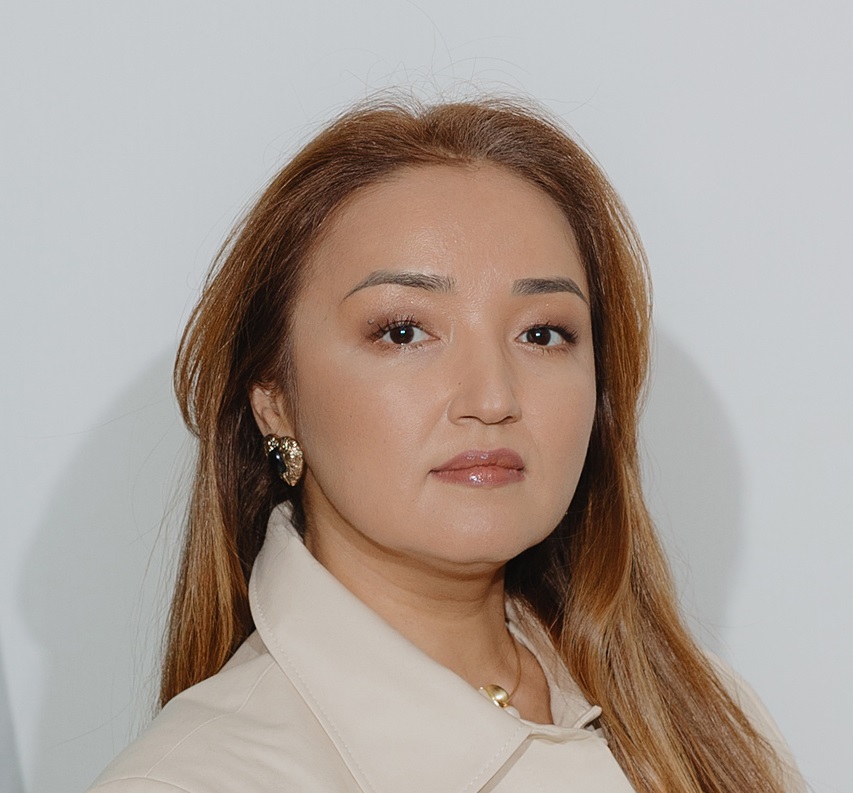
In the new digital era, Kazakhstan needs to secure a strong position in the field of advanced technologies. Vice Minister of Science and Higher Education Dinara Shcheglova speaks about the implementation of artificial intelligence in the country's universities, specifically regarding the realization of the AI-Sana program, which provides large-scale, high-level AI training for students of Kazakhstani universities and opens up opportunities for them to create their own high-tech startups ready for market launch.
Comments